

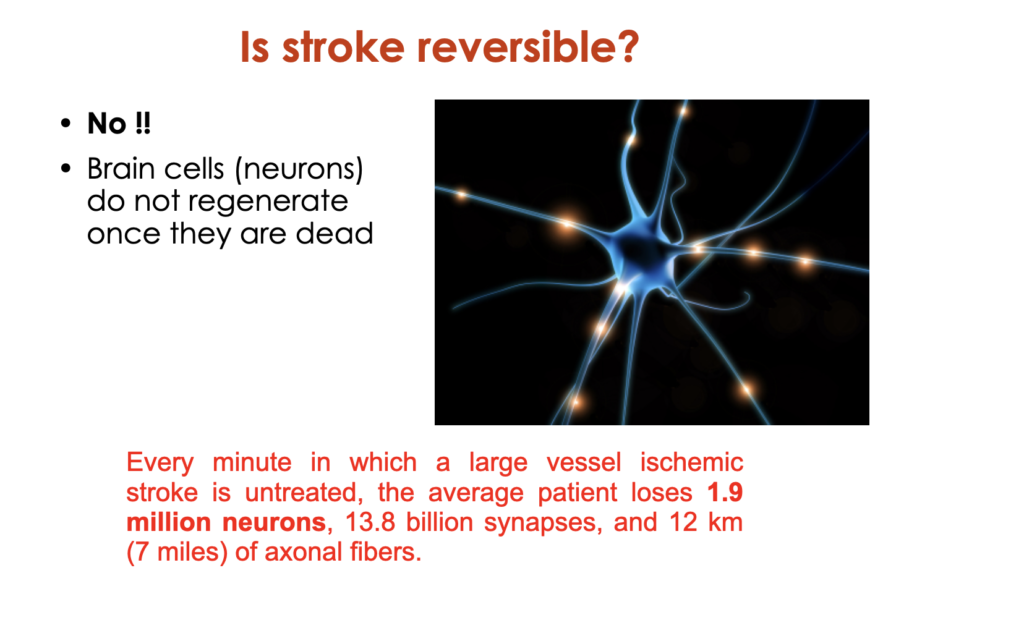
Is a stroke irreversible? It’s a question that worries many patients and their
families. The truth is—not always. The extent of stroke damage can vary greatly depending on
several factors: the type of stroke, how quickly treatment is received, the part of the brain affected,
and the individual’s overall health.
A stroke occurs when blood flow to a portion of the brain is interrupted, causing brain cells to lose
oxygen. There are two main types of strokes:
So, is the damage from a stroke permanent?
The answer depends on one key factor: time. The faster a person receives treatment, the better
the chance of limiting or even reversing the damage. That’s why the first few hours after symptom
onset—often called the Golden Hour—are so
critical.
In the case of an ischemic stroke, if a clot-busting drug called tPA (tissue plasminogen
activator) is administered within the first 3 to 4.5 hours, it can significantly reduce or eliminate the
brain damage caused by the stroke. In some advanced stroke centers, mechanical clot removal
(thrombectomy) may be performed up to 24 hours after symptoms begin.
Can the brain heal after a stroke?
The human brain is incredibly adaptive, especially with the help of early rehabilitation. While some
brain cells may be permanently damaged, the brain can often reorganize itself to regain lost functions.
This process is called neuroplasticity. Through therapy and effort, stroke survivors may
relearn skills like walking, speaking, or using their hands.
That said, the extent of recovery varies:
The key takeaway: Stroke damage is not always irreversible, but delays in treatment
make it harder to reverse. That’s why education and awareness matter so much. Tools like the BEDFFASTT acronym can help people
recognize symptoms
and act quickly.
What about recovery?
Recovery depends on many factors, including: